



SMC Insurance
Welcome to SMC.
How may I assist you?
by Deepika Sivadas on Friday, 21 November 2025
| Last Updated on Monday, 16 March 2026


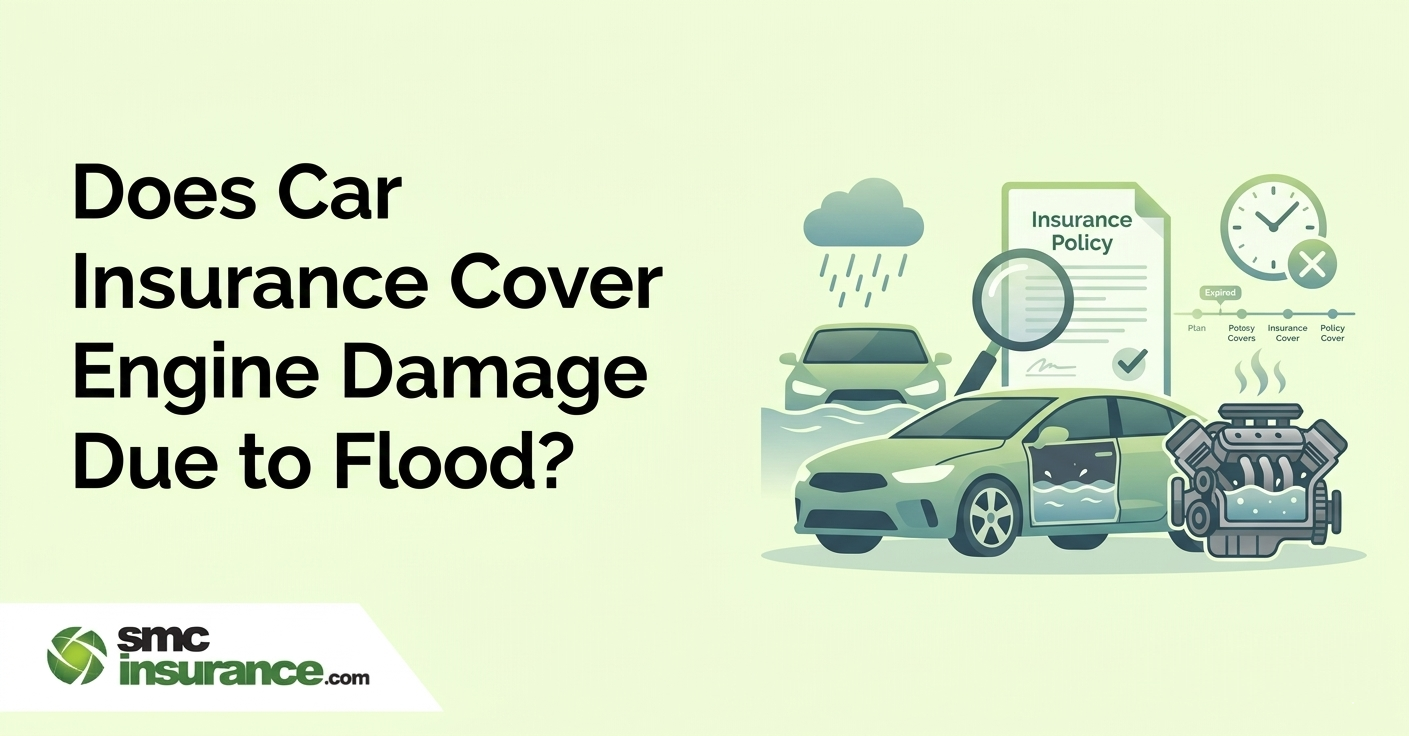
Yes, car insurance can cover engine damage caused by floods, but it depends on the type of policy and add-ons included. A comprehensive car insurance policy generally covers flood damage to the vehicle’s exterior and electrical components. However, engine damage caused by water entering the engine is usually not covered under the standard policy because it is often treated as consequential damage.
To get coverage for such situations, car owners need an Engine Protection Add-On. This add-on covers repair or replacement costs if floodwater enters the engine and damages internal parts such as pistons, crankshaft, or gearbox. In short:
Engine protection cover is especially useful for drivers in areas that experience frequent waterlogging or heavy monsoon rains.
If you’ve driven during the monsoon in India, you already know how quickly things can change. A road that looked perfectly normal ten minutes ago suddenly fills with water. Traffic slows. A few cars stall. People start turning around. And somewhere in that mess, someone’s engine gives up.
Flooded cars are not rare during heavy rains. What many drivers don’t realize until later is that the real damage may not be visible from outside. The body might look fine, the tyres untouched. But inside the engine, things could be very different. Repairs in such cases can get expensive. Yes, very very expensive! Naturally, the next thing people ask is simple:
The answer depends on the policy you hold and the coverage attached to it. Some flood damage is covered under car insurance. Engine damage, however, sits in a slightly tricky zone.
Let’s walk through how it actually works.
Cars are designed to handle rain. They are not designed to swallow water. When a vehicle drives through deep water, there’s a chance that water enters the air intake. Once that happens, it can travel straight into the engine. Inside the engine, pistons compress a mixture of air and fuel. That compression is a basic part of how engines run.
Water behaves differently. It doesn’t compress like air does. So when water reaches the combustion chamber, the piston suddenly meets resistance. The engine may stall instantly. Sometimes internal components bend or break under that pressure.
Mechanics often call this hydrostatic lock, or simply hydrolock. In practical terms, it means serious engine trouble. Sometimes the engine stops right away. Other times the damage shows up later. The car may start, but strange noises begin to appear. Power drops. Smoke comes out of the exhaust. And by the time the vehicle reaches the garage, the repair estimate can be quite large.
In India, most car owners hold one of two policy types:
Third-party insurance is the basic legal requirement. It protects you if your vehicle causes damage to someone else’s property or injures another person. But it does not cover damage to your own car.
That’s where comprehensive insurance comes in. A comprehensive policy covers several types of damage, including accidents, theft, fire, natural disasters like floods, storms, or cyclones, etc. So, if flood water damages the exterior parts of your vehicle, a comprehensive policy may pay for those repairs.
But here’s the part many people don’t expect. The engine itself is often treated differently.
Insurance companies look closely at what caused the engine failure. In many flood-related cases, engine damage falls under something called consequential loss. That simply means the damage happened because of something that occurred after the original incident.
Here’s a common example:
A car stalls in deep water. The driver turns the key several times trying to restart it. If water has already entered the engine, those attempts can worsen the damage. From the insurer’s perspective, the engine didn’t fail just because of the flood. It failed because the engine was ignited while water was inside.
Because of this reasoning, many standard policies exclude engine damage in such situations. This is usually the moment when car owners realize their policy does not cover the biggest repair bill.
To fill this gap, insurers offer something called Engine Protection Cover. This is not part of the base policy. It’s an add-on that you choose while buying or renewing comprehensive insurance. Its purpose is fairly straightforward. It covers certain types of internal engine damage that a regular policy leaves out.
Flood-related engine damage is one of the main reasons people buy this add-on. When water enters the engine and causes internal damage, the repair cost may be covered under this protection. Without it, the owner often pays the entire amount.
Coverage details vary between insurers, but engine protection typically includes repairs related to:
Engines contain several precision parts. Repairs often involve dismantling and replacing multiple components. That’s why insurers treat engine protection as a separate add-on instead of including it in standard policies.
Even with engine protection, there are situations where insurers may deny a claim. A few common examples include:
Insurance policies usually expect drivers to take reasonable care once flooding occurs. If the vehicle is repeatedly started while submerged, insurers may consider that negligence.
Think of two different situations during a heavy downpour:
In the first case, a car is parked outside overnight. Rainwater collects on the street and partially floods the vehicle. The next morning, the owner notices the situation and avoids starting the engine. Instead, the car is towed to a garage. If the owner has engine protection cover, the repairs may be covered.
Now imagine another situation:
A driver tries to cross a waterlogged road. The car stalls halfway. The driver turns the ignition several times hoping it will start again. Later, the engine stops working completely. In this case, the insurer might say the damage occurred after repeated ignition attempts. The claim may not go through.
Small decisions during flooding can change how a claim is assessed.
Anyone living in cities like Mumbai, Chennai, or Bengaluru has seen how quickly roads can flood during heavy rain. Sometimes it takes only one hour of intense rainfall. Cars parked outdoors are especially vulnerable. Even vehicles moving slowly through water can end up with water entering the engine.
Because of this, engine protection add-ons have become more common in cities where waterlogging happens regularly. For many drivers, it offers reassurance during the monsoon months.
Quick Look at Coverage Differences
|
Insurance Type |
Exterior Flood Damage |
Engine Flood Damage |
|
Third-Party Policy |
Not covered |
Not covered |
|
Comprehensive Policy |
Covered |
Usually excluded |
|
Comprehensive + Engine Protection |
Covered |
Covered |
That small add-on can be the difference between a covered repair and a very large bill.
Sometimes the damage isn’t obvious right away. Drivers may notice a few warning signs later:
If these appear after driving through water, it’s safer to stop using the vehicle and get it checked. Continuing to drive may worsen the damage.
A few simple steps can prevent further damage:
Engine protection is the most important add-on in flood situations, but a few others can also help:
Together, these add-ons strengthen the overall policy.
Car insurance policies vary widely between insurers. Coverage terms, add-ons, and claim processes may differ. That’s why many car owners prefer comparing options before buying a policy.
Platforms like SMC Insurance bring multiple insurers together in one place. Drivers can review different car insurance plans, compare coverage, and choose policies that include useful add-ons such as engine protection. This approach makes it easier to understand what a policy actually covers before a claim situation arises.
Summing Up,
Flood damage can happen quickly. A sudden downpour, a flooded street, a stalled car. Sometimes the vehicle survives with minor repairs. Sometimes the engine takes a hit. While comprehensive car insurance protects against many natural disasters, engine damage often requires additional coverage.
Engine protection add-ons exist for that reason. For drivers living in areas where waterlogging is common, this extra layer of protection can prevent large repair expenses and claim surprises later. One flooded road is sometimes all it takes to damage an engine. Having the right coverage beforehand makes that situation far easier to deal with.
Disclaimer:The information provided on this platform is intended for general awareness and educational purposes. While every effort is made to ensure accuracy, some details may change with policy updates, regulatory revisions, or insurer-specific modifications. Readers should verify current terms and conditions directly with relevant insurers or through professional consultation before making any decision.
All views and analyses presented are based on publicly available data, internal research, and other sources considered reliable at the time of writing. These do not constitute professional advice, recommendations, or guarantees of any product’s performance. Readers are encouraged to assess the information independently and seek qualified guidance suited to their individual requirements. Customers are advised to review official sales brochures, policy documents, and disclosures before proceeding with any purchase or commitment.
Engine damage caused by floods is usually not covered under a standard comprehensive car insurance policy. To cover such damage, you typically need an engine protection add-on, which pays for repairs if water enters the engine and damages internal parts.
Engine protection cover is an optional add-on that protects your car’s engine and gearbox from damage caused by water ingress, oil leakage, or hydrostatic lock. It helps cover expensive engine repair or replacement costs that a basic policy may exclude.
Yes, a comprehensive car insurance policy may cover damage caused by floods when the car is parked. However, if the engine gets damaged due to water entering it, coverage usually depends on whether you have engine protection cover.
Do not try to start the engine. Move the car to higher ground if possible, inform your insurer immediately, and arrange for towing to a garage. Starting the engine in water can worsen the damage and may affect your insurance claim.
It is not mandatory, but it is highly useful for cars driven or parked in flood-prone or waterlogged areas. Since engine repairs can be costly, many car owners choose this add-on for better financial protection.
SMC Insurance Brokers Pvt. Ltd.
SMC Metro Mall, Near Pratap Nagar Metro Station, Pratap Nagar, New Delhi-110007
Registration No: 289, Registration Code No: IRDAI/DB-272/04/289, Valid till: 27/01/2029, License category: Composite Broker, CIN: U66000DL1995PTC172311
Insurance is the subject matter of solicitation.
Visitors are hereby informed that their information submitted on the website may be shared with insurers.
Product information is authentic and solely based on the information received from the Insurer.
