






SMC Insurance
Welcome to SMC.
How may I assist you?
Motor insurance offers financial protection against loss or damages caused to the motor vehicle because of an accident, theft, a natural calamity, etc. It provides cover to you, the insured vehicle, a third-party person and their property.
As per the Motor Vehicles Act, 1988, it is mandatory to purchase third-party motor insurance. Driving a motor vehicle without insurance in a public place is a punishable offense. Irrespective of whether you're purchasing motor insurance online or offline, it is important that you purchase it from a company authorized by the IRDAI.
Every person who owns a motor vehicle must buy a third-party motor insurance policy under the Motor Vehicles Act, 1988. Failure to do so is a punishable offense with a fine of ₹2,000 for first offense and ₹4,000 for subsequent offenses.
A digital copy of your insurance policy stored on DigiLocker or the mParivahan app is legally accepted by traffic police in India.
IRDAI requires KYC authentication for all motor insurance customers effective January 1, 2023. Methods include Aadhaar-based KYC, Digital KYC, Video KYC and CKYC.
Motor insurance is not just a legal necessity, but a critical financial safeguard for every vehicle owner in India.
Driving without insurance attracts fines of ₹2,000 for first offence and ₹4,000 for subsequent offences, along with possible imprisonment up to 3 months. Fines increase 10% annually from April 1st.
Vehicle repair costs are extremely high today. A motor insurance policy provides financial protection against accidents, theft, or any other serious damage to your motor vehicle.
From thefts to accidents, from manmade disasters to natural calamities — motor insurance covers them all. It also protects against legal liabilities for damages caused to third parties.
The IRDAI has introduced several important regulatory changes in recent years that affect how motor insurance works in India.
Effective April 1, 2024, these mandate wider product variety, clearer policy prospectuses and electronic issuance. A "Customer Information Sheet" must now accompany every policy document explaining key features in plain language.
Insurers must have board-approved, transparent claim-settlement policies. All deductions must be documented. Motor insurance complaints dropped from 26.18% in FY 2023-24 to 24.8% in FY 2024-25.
KYC authentication required for all motor insurance customers. Accepted methods: Aadhaar-based KYC, Digital KYC, Video KYC and Central KYC (CKYC).
A digital copy of your motor insurance certificate stored on DigiLocker or the mParivahan app is now legally accepted by traffic police across India.
No need to stand in long queues or fill out paper forms. The entire buying process is digital and hassle-free.
Research and compare various options available from multiple insurers and make an informed decision.
Avail exclusive discounts and special offers on the premium amount available only on online platforms.
Purchase and renew your policy from anywhere at any time — in just a few clicks.
Policy issuance is immediate. Receive your policy document directly to your registered email in minutes.
The most complete coverage — covers both third-party liability and damages caused to your own vehicle. The best of both worlds!
The most basic vehicle insurance and a statutory requirement. Covers injury/losses caused to a third party individual or property by your insured vehicle.
Covers damages to your own vehicle due to fire, rain, theft, etc. Raise a claim to get compensation for repair expenses incurred.
| Engine Capacity | Annual TP Premium | Notes |
|---|---|---|
| Up to 1,000 cc | ₹2,100 | Standard rate |
| 1,000 cc to 1,500 cc | ₹3,400 | Standard rate |
| Above 1,500 cc | ₹7,897 | FY24 base rate |
| Electric Vehicles (EVs) | 15% Discount | On TP premium — green mobility incentive |
| Hybrid Electric Vehicles | 7.5% Discount | On TP premium |
With the rapid growth of electric vehicles in India, EV-specific insurance has become an important consideration with unique features and government-mandated discounts.
Discount on third-party insurance premium for electric vehicles compared to petrol/diesel
IRDAI mandatedThird-party premium discount available for Hybrid Electric Vehicles (HEV) under IRDAI guidelines
Hybrid EVBattery pack typically accounts for nearly half the total EV value — making battery cover essential
Always insure batteryWhy battery protection cover matters
EV Insurance Advantages & Key Add-ons
Key EV insurance cover types explained
Battery protection
Covers damage, degradation, and replacement of the EV battery pack — essential given high replacement costs
Charging equipment
Protects your home charger and portable cables from theft, fire, and accidental damage
Zero depreciation
Get full claim value without deductions for part depreciation — especially valuable for EVs with expensive parts
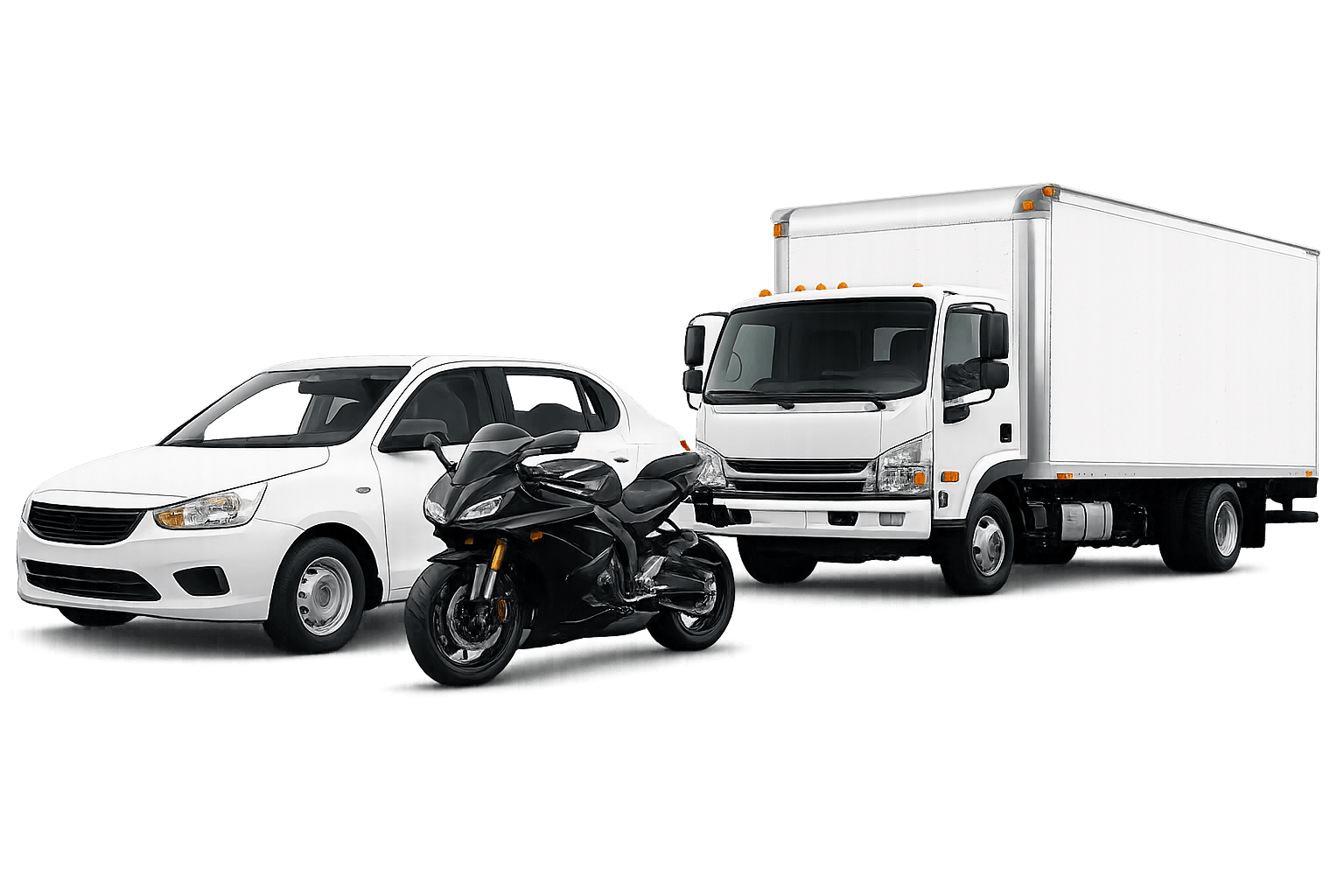
There are three main categories of motor insurance in India based on the type of vehicle and its purpose.
Covers motor vehicles used for private or personal purposes against burglary, accidents, man-made disasters, natural calamities, and more.
Covers bikes, scooters and other two-wheelers. Offers protection against accidents, fire, theft, and other mishaps.
Covers all types of vehicles used for commercial purposes — buses, cabs, auto-rickshaws, trucks, ambulances, agricultural vehicles, etc.
Motor insurance add-ons provide extra protection beyond standard policies. Here is a concise breakdown of available covers.
Note: Motor insurance is vital even if your vehicle is rarely used. Always review policy details to select the add-ons that best suit your specific driving needs.
IRDAI has permitted general insurance companies to offer telematics-based motor insurance policies — ideal for low-mileage or safety-conscious drivers.
Premium is calculated based on the number of kilometres driven. You declare your expected annual mileage and pay accordingly — ideal for people who primarily use public transport and drive their vehicle sparingly.
City dwellers who use public transport daily and only take their car out on weekends.
A telematics device monitors your driving behaviour — speed, braking, acceleration, time of day — and adjusts your premium based on how safely you drive. Good drivers get rewarded with lower premiums.
Careful drivers who maintain low speeds, brake smoothly and avoid late-night driving.
Motor insurance coverage is subject to specific terms and conditions. Here is a breakdown of what is typically included and excluded.
IDV is the maximum sum assured fixed by the insurer, representing the current market value of your vehicle. It determines the payout in case of total loss or theft.
Standard IDV Calculation Formula
| Age of Vehicle | Depreciation % |
|---|---|
| Up to 6 months | 5% |
| 6 months – 1 year | 15% |
| 1 – 2 years | 20% |
| 2 – 3 years | 30% |
| 3 – 4 years | 40% |
| 4 – 5 years | 50% |
| Beyond 5 years | Negotiated |
Harsh purchased a luxury car worth ₹30 lakhs. After two years, the car's IDV is ₹21 lakhs (30% depreciation).
Harsh set IDV at ₹12 lakhs to save on premium. When his car was stolen, he received only ₹12 lakhs instead of ₹21 lakhs — a loss of ₹9 lakhs. Premium savings cost him dearly.
Harsh checked the second-hand market, discovered similar cars sell for ₹22 lakhs, and set IDV at ₹21 lakhs. In case of theft or total loss, he receives the correct compensation.
Two people with the same car may pay different premiums because insurance pricing is personalized based on risk. Here are the key factors that determine your premium.
Overall Premium = [Own Damage Cover + Third-Party Liability Cover + Add-Ons] − [Discounts & Benefits (NCB, Theft Discount, etc.)]
Lower your premium costs without compromising on essential coverage by following these strategic steps.
Evaluate different insurers and online platforms for the most competitive rates for the same benefits.
Only pay for extra covers that are truly essential for your specific driving needs.
Choosing a higher voluntary deductible reduces your premium. Pay more out-of-pocket per claim but save on annual premiums.
Pay small repairs yourself to preserve your No Claim Bonus (NCB) — which can save 20%–50% at renewal.
Fitting ARAI-certified devices reduces theft risk and insurers reward this with premium discounts.
Membership in recognized bodies like AAI or WIAA qualifies you for additional premium discounts.
Go to the SMC Insurance website and click on the insurance category you want — Car Insurance or Bike Insurance.
Enter your registered vehicle number and click "View Quotes" to get instant quotes from multiple insurers.
Provide your vehicle details — brand, model, fuel type, variant and respective RTO. Confirm NCB details and policy dates.
SMC displays a list of available plans from partner insurers. Compare coverage, benefits, inclusions, exclusions, add-ons and IDV.
Click "Buy Now" on your chosen plan. Fill in personal details — owner name, address, contact, driving licence and RTO info.
Complete payment via online gateway. Receive your policy document electronically via email. Keep a digital copy for reference.
Third-Party Only: Suitable if you drive infrequently or want minimum legal compliance at lowest premium.
Comprehensive: Recommended for most drivers — covers third-party liabilities and damage to your own vehicle.
A lower IDV reduces your premium but can leave you with a massive financial gap if the vehicle is lost. Always set IDV to reflect the actual market worth.
Tailor your base policy with Zero Depreciation, NCB Protector and Roadside Assistance — based on your specific driving habits and risk exposure.
Cashless claim facility is only available at the insurer's Network Garages. Verify that quality network garages are near your home and workplace before buying.
A seamless claim process depends upon following the correct steps. Failing to do so may result in your claim being declined.
Disclaimer: The information provided on this platform is intended for general awareness and educational purposes. While every effort is made to ensure accuracy, some details may change with policy updates, regulatory revisions, or insurer-specific modifications. Readers should verify current terms and conditions directly with relevant insurers or through professional consultation before making any decision.
All views and analyses presented are based on publicly available data, internal research and other sources considered reliable at the time of writing. Customers are advised to review official sales brochures, policy documents and disclosures before proceeding with any purchase or commitment.
SMC Insurance Brokers Pvt. Ltd.
SMC Metro Mall, Near Pratap Nagar Metro Station, Pratap Nagar, New Delhi-110007
Registration No: 289, Registration Code No: IRDAI/DB-272/04/289, Valid till: 27/01/2029, License category: Composite Broker, CIN: U66000DL1995PTC172311
Insurance is the subject matter of solicitation.
Visitors are hereby informed that their information submitted on the website may be shared with insurers.
Product information is authentic and solely based on the information received from the Insurer.
