





SMC Insurance
Welcome to SMC.
How may I assist you?
by Deepika Sivadas on Sunday, 11 June 2023
| Last Updated on Monday, 16 March 2026


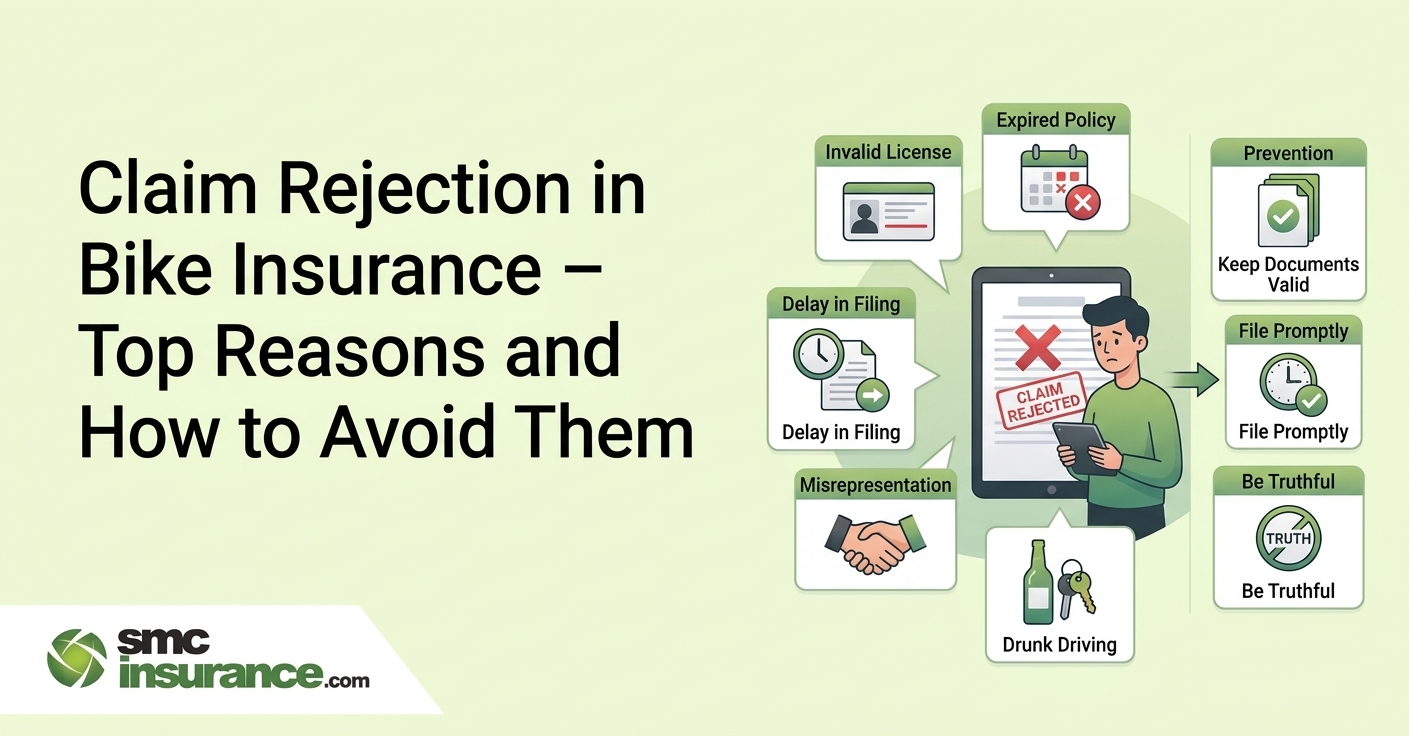
Bike insurance claims get rejected mainly due to policy violations, missing documents, or delays in reporting accidents. Common reasons include an expired policy, riding without a valid driving licence, drunk driving, late claim intimation, undisclosed bike modifications, repairing the bike before survey, or filing claims for damages not covered under the policy. Claims may also be denied if the bike was used for unauthorized purposes or if ownership details were not updated after resale.
To avoid claim rejection, renew the policy on time, inform the insurer immediately after an accident, keep all documents ready and follow policy rules carefully. Understanding coverage, exclusions and the correct claim process helps ensure a smoother and successful bike insurance claim.
A bike insurance policy promises support during tough moments. You ride daily. You renew the policy on time. And you trust that if something goes wrong, the insurer will step in and cover the loss. But the moment a claim gets rejected, everything changes. The repair bill lands on your table. The expectation of financial support disappears. And the question that follows is simple: Why did the claim fail?
Many riders assume insurance will pay for every accident. In reality, claims go through checks. Insurers review documents, inspect the vehicle and verify what happened during the incident. If something doesn’t match the policy rules, the claim can get denied. The good news is that most claim rejections happen due to avoidable mistakes. Small oversights, missed steps or policy details riders didn’t notice earlier.
Once you know these reasons, you can avoid them easily. This guide walks through the most common causes of bike insurance claim rejection and simple ways to prevent them.
Insurance works on a clear agreement. You pay a premium. The insurer promises financial support if the damage falls within policy coverage. But this agreement also comes with rules. If those rules are ignored, the insurer can reject the claim.
Some rejections happen due to legal violations. Others happen due to incomplete documentation, delays in reporting the accident, or filing claims for things not covered under the policy. Most riders realize these issues only after the claim gets denied. So let’s go through the reasons one by one.
Here are some of the top reasons:
How to avoid this?
Staying covered at all times removes this risk completely.
How to avoid this?
Quick reporting makes the process smoother.
Insurance policies clearly state that the rider must be legally eligible to drive.
How to avoid this?
A simple document can decide the outcome of your claim.
How to avoid this?
Responsible riding protects both your life and your insurance coverage.
How to avoid this?
Honesty protects the claim.
If a rider with third-party insurance files a claim for personal bike repairs, it will be rejected.
Even comprehensive policies have exclusions. Typical exclusions include:
Claims raised for these issues will not be approved.
How to avoid this?
Knowing what the policy covers avoids confusion later.
How to avoid this?
This keeps the coverage valid.
Missing any of these can delay the process or even lead to rejection.
How to avoid this?
Keep a digital copy of essential documents. This helps during emergencies.
How to avoid this?
Patience during this step protects your claim.
How to avoid this?
Use the bike strictly within policy guidelines.
How to avoid this?
This simple step prevents complications later.
Most claim rejections follow a pattern. They happen due to missing documents, delayed reporting, or policy violations. A few careful habits can prevent most of these issues.
Simple Steps Riders Should Follow:
These habits improve the chances of smooth claim approval.
Claim rejection does not always mean the end of the road. Sometimes claims fail due to missing documents or incorrect details. In such cases, you can still take action.
Steps to follow:
If the issue remains unresolved, policyholders can approach the Insurance Ombudsman for further review.
Many claim problems start with one simple issue. Riders buy policies without fully understanding coverage details. This is where choosing the right insurance platform makes a difference.
Platforms like SMC Insurance help riders compare policies from multiple leading insurers in one place. Instead of picking the first option available, riders can review coverage benefits, add-ons and exclusions before buying.
This clarity helps reduce claim surprises later. Another advantage is claim assistance. When an accident occurs, professional guidance can help riders follow the correct claim process and submit the right documents. That support often makes the difference between claim approval and rejection.
Bike insurance offers financial protection when accidents occur. But the protection works only when the policy rules are followed. Most claim rejections are not caused by insurers refusing payment randomly. They happen because something in the process didn’t match the policy conditions. The encouraging part is that these problems are largely preventable.
Some simple habits can protect your claim and your finances. and when you choose the right insurance platform, the entire process becomes much easier to manage. Because insurance works best when you understand how it truly operates.
Disclaimer:The information provided on this platform is intended for general awareness and educational purposes. While every effort is made to ensure accuracy, some details may change with policy updates, regulatory revisions, or insurer-specific modifications. Readers should verify current terms and conditions directly with relevant insurers or through professional consultation before making any decision.
All views and analyses presented are based on publicly available data, internal research, and other sources considered reliable at the time of writing. These do not constitute professional advice, recommendations, or guarantees of any product’s performance. Readers are encouraged to assess the information independently and seek qualified guidance suited to their individual requirements. Customers are advised to review official sales brochures, policy documents, and disclosures before proceeding with any purchase or commitment.
Bike insurance claims usually get rejected due to an expired policy, delayed claim reporting, riding without a valid driving licence, drunk riding, or submitting incomplete documents. Claims may also fail if the damage is not covered under the policy or if the bike was modified without informing the insurer.
Yes, most insurers require accidents to be reported within a short time, often within 24–48 hours. If the claim is reported late, it becomes harder for the insurer to verify the incident, which may lead to claim rejection.
No, if the rider was under the influence of alcohol or drugs during the accident, the insurer can reject the claim. Riding under the influence is considered a violation of policy terms and traffic laws.
Common documents include the bike’s registration certificate (RC), valid driving licence, insurance policy copy, repair bills, photos of the damage, and an FIR in case of theft or major accidents.
To avoid claim rejection, renew your policy on time, inform the insurer immediately after an accident, keep your driving licence valid, follow policy rules, and submit all required documents during the claim process.
SMC Insurance Brokers Pvt. Ltd.
SMC Metro Mall, Near Pratap Nagar Metro Station, Pratap Nagar, New Delhi-110007
Registration No: 289, Registration Code No: IRDAI/DB-272/04/289, Valid till: 27/01/2029, License category: Composite Broker, CIN: U66000DL1995PTC172311
Insurance is the subject matter of solicitation.
Visitors are hereby informed that their information submitted on the website may be shared with insurers.
Product information is authentic and solely based on the information received from the Insurer.
